Section 13 rent increase notices done properly
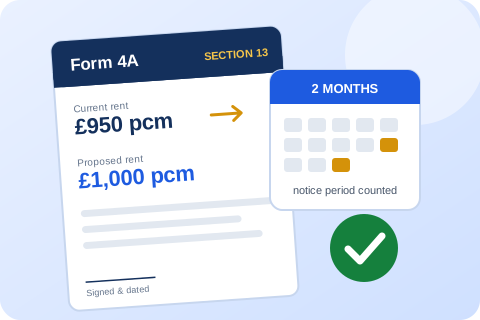
Since 1 May 2026 a landlord in England can only raise the rent on an assured periodic tenancy by serving a Section 13 notice (Form 4A), no more than once every 12 months. Get a date, a form or the service wrong and the increase can fail. We prepare, check and serve it for you.
- From £35 per notice
- Fixed price, confirmed before you pay
- Landlords and agents only
Letting in Birmingham? See our Section 13 rent increase service for Birmingham landlords.
Law and fees checked 28 October 2026.
What is included
- Form 4A completed with the correct tenancy details
- Date check: earliest valid start date and the minimum two-month notice
- Proposed rent sense-check against local asking rents so it is defensible at tribunal
- Service by hand or post to every named tenant, with a dated proof-of-service record (serve option)
- A short letter to tenants explaining the increase (optional, reduces disputes)
- Diary reminder for your next permitted increase
What changed on 1 May 2026
Under the Renters' Rights Act, rent review clauses and index-linked increases (CPI, RPI, fixed annual percentages) stopped being enforceable. The only route to a higher rent during an assured periodic tenancy is a Section 13 notice on the prescribed form (Form 4A).
| Rule | What it means for you |
|---|---|
| Once every 12 months | No more than one increase in any 12-month period, and the first increase cannot come before the tenancy's first anniversary. |
| Minimum two months' notice | The proposed start date must be at least two months after the notice is served. Serve late and the notice is invalid. |
| Prescribed form | Form 4A, correctly completed. A letter or email saying "rent is going up" does not count. |
| Tenant can challenge | The tenant can refer it to the First-tier Tribunal, which can decide the market rent. It cannot set a rent higher than the one you proposed. |
| Hardship | In cases of undue hardship the tribunal may delay when the new rent starts. |
Rent dispute changes are coming. The government has announced that rent-increase disputes will move from the tribunal to the Valuation Office Agency, but at the time of writing no start date is confirmed. Until then applications still go to the tribunal.
Why landlords get this wrong
- Using an old Section 13 form or the wrong version.
- Counting the two months from the date of posting, not the date of service.
- Increasing within 12 months of the last increase, or of the tenancy start.
- Not naming every joint tenant, or serving only one.
- Setting the proposed rent far above comparable lets, inviting a tribunal reduction and ill will.
How much should you put the rent up by?
We do not value your property, but we will show you how the proposed figure compares with current asking rents for similar homes nearby, so you can choose a figure you can justify. A modest, well-evidenced increase is far less likely to end up in front of a tribunal than an aggressive one.
Read our full guide: How to increase rent under the Renters' Rights Act.
Frequently asked questions
Local help in your area
Ready to go?
Send your details and we will confirm scope and price, then get started.
Order or enquire